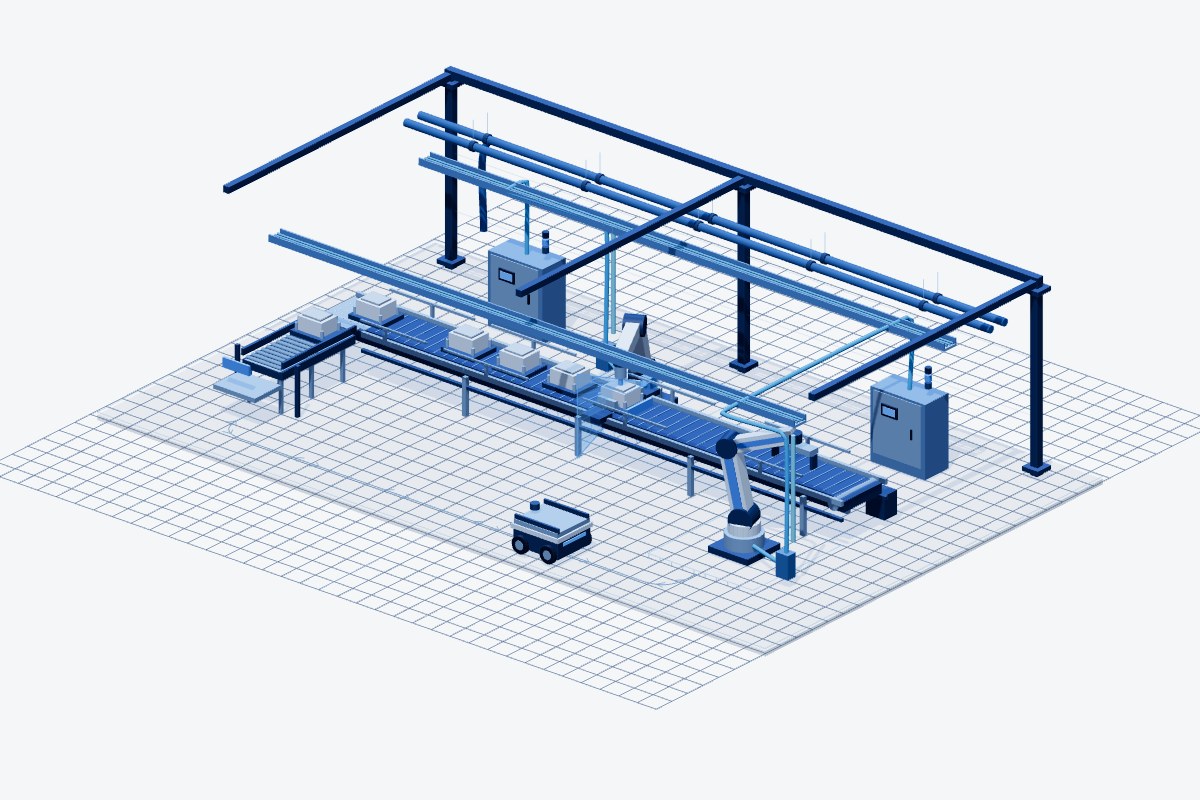
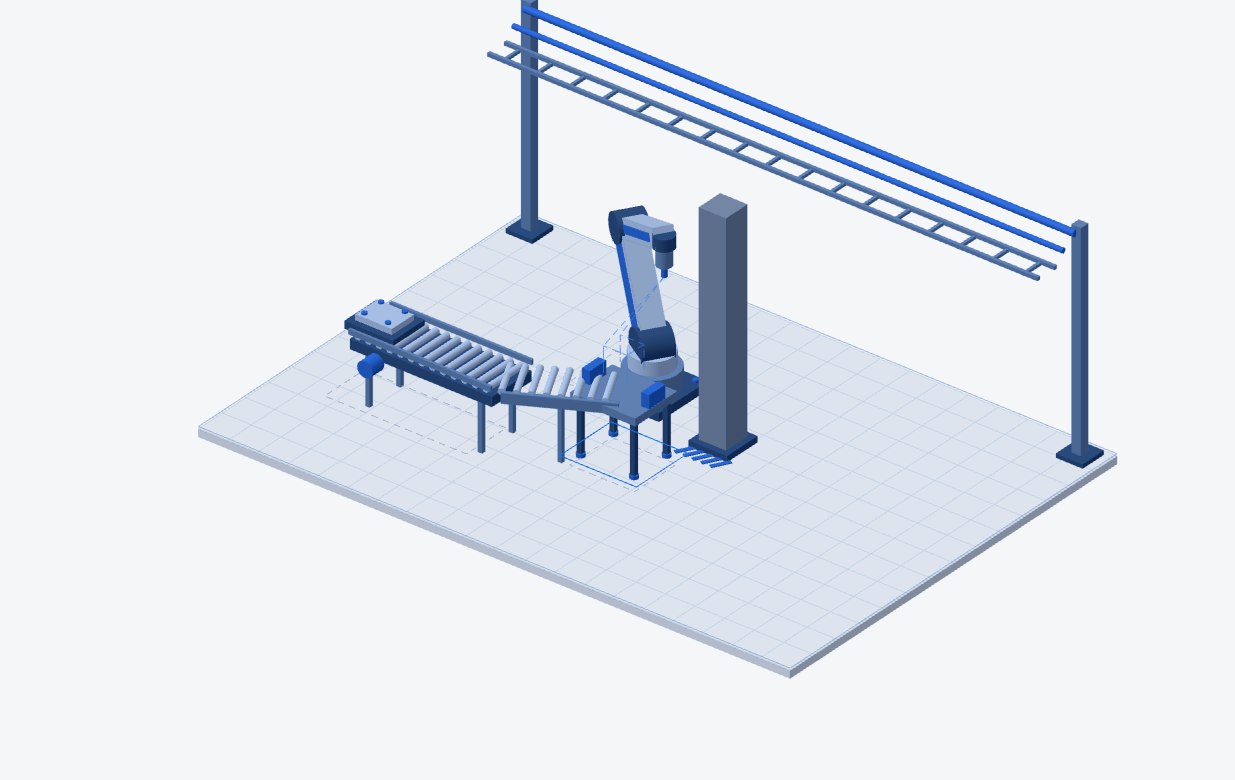
Planning questionWill the equipment fit, and can teams review the same layout?
OpenUSD + custom Omniverse Kit tools for measurement and collision review. The saving is a projection, not our customer result.
02 / Retool · Industry case · Schaeffler
Test the cell change. Before installation.
Simulate robotic tasks and production configurations before deploying changes.
Reach.Motion.Commissioning.
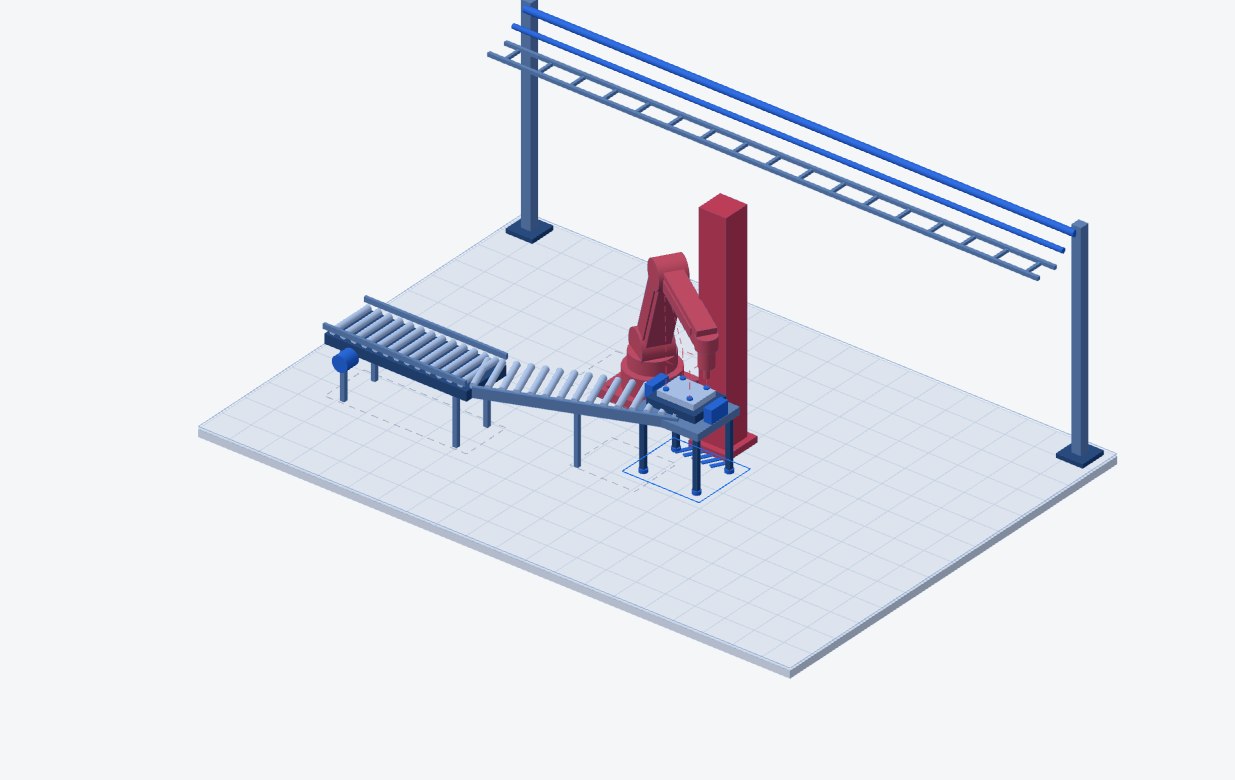
Workflow illustration · constraint and alternative
Retooling questionCan the robot perform the new task in the available space?
OpenUSD, simulation and virtual commissioning support the application. This case concerns robot/process reconfiguration; no whole-plant retooling saving is assumed.
03 / Improve · Industry case · Wistron
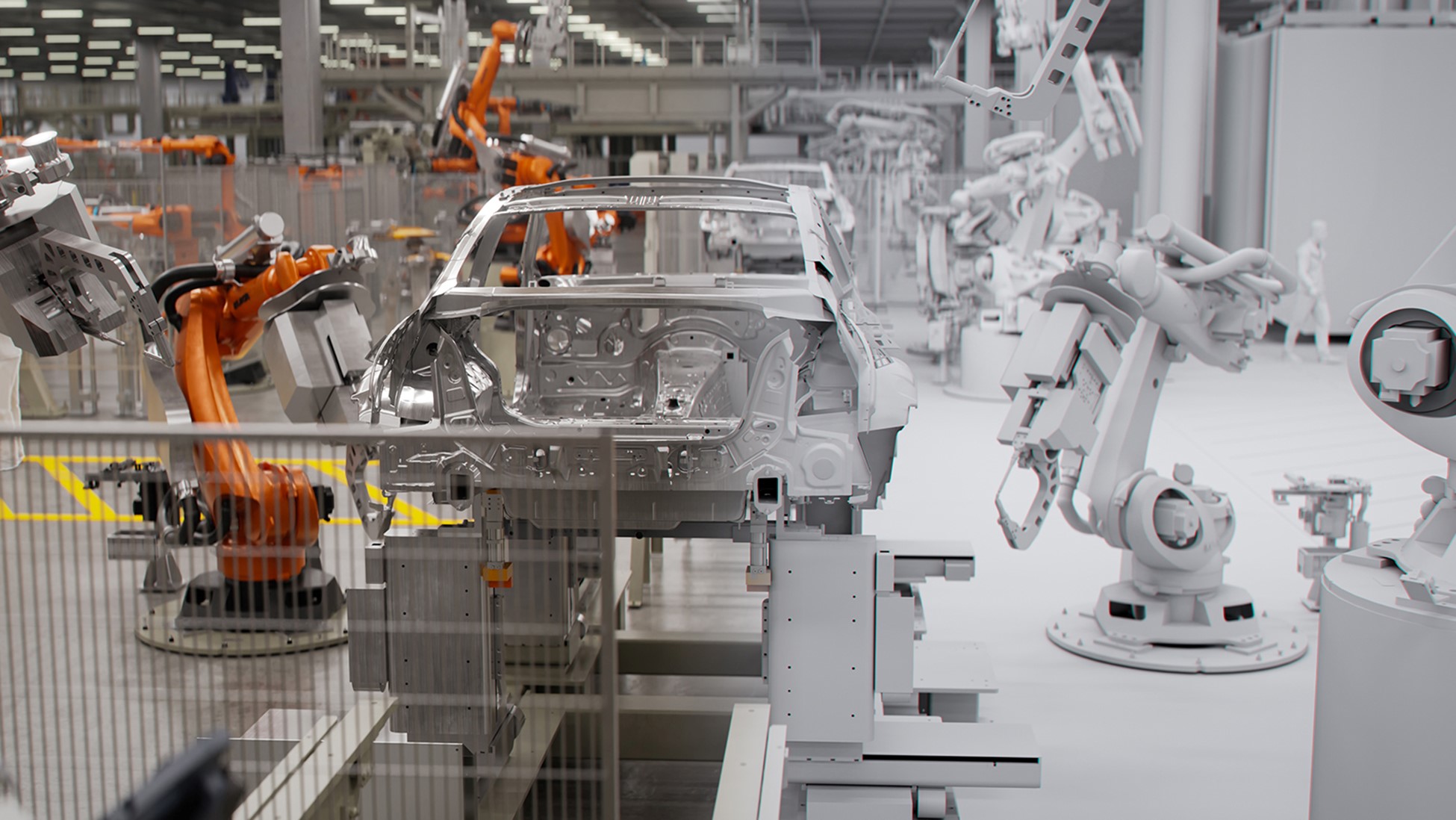
Find the constraint. Test the next move.
Production data and process simulation reveal bottlenecks and guide layout changes.
51%reported improvement in bottleneck production-line efficiency
Workflow illustration · data → scenario → review
Operations questionWhich station limits output, and which change should we test?
Company-reported, March 2024. The metric is specific to the bottleneck line; it is not a plant-wide OEE result or a forecast for our service.
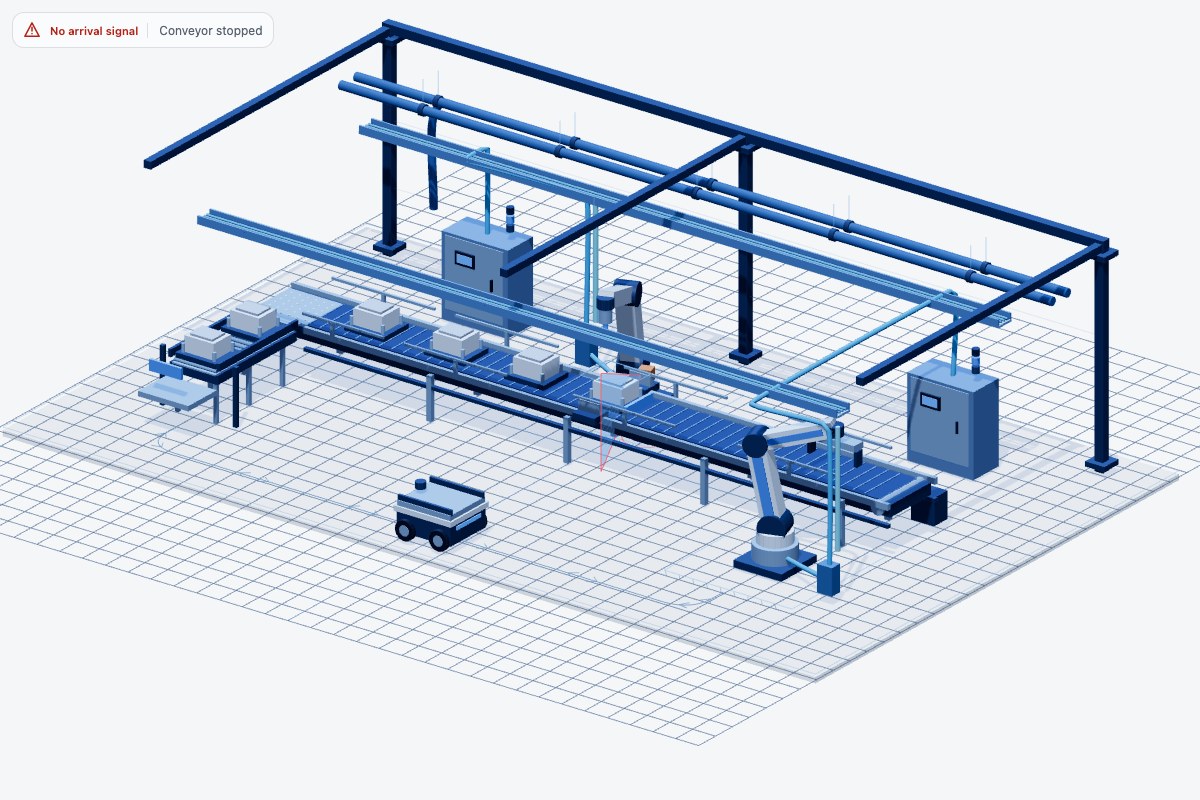
Follow a missing scanner input through diagnosis and repair.
Synthetic scene and signals. This is a browser demonstration, not a connected Omniverse or PLC deployment. Drag the sensor in Realign to restore detection.
NVIDIA supplies modular building blocks. Geometry needs behavior and calibrated inputs; a GPU-backed runtime would be separate from this static website.
Technology readiness / Our evidence
A working prototype. A measured cell next.
Today / Demonstrated
Interactive prototype
Three.js scene and synthetic signals
Layout edits and sampled checks
Cycle and cost assumptions
Next / Proposed pilot
Validated cell model
Measured layout and robot/tool data
OpenUSD / NVIDIA integration
Agreement with reference timing
Later / Future work
Connected operations
Read-only production events
Measured operating performance
Validated improvement scenarios
Next evidence gateAn engineer accepts the geometry, robot motion and baseline timing.
NVIDIA runtime integration, live PLC data and measured customer outcomes remain future work. Current nominal capacity is not measured OEE.
Commercial model · Pricing hypothesis
Engineering revenue. In two stages.
Pre-retooling auditCA$35k
One scoped change · 2–4 weeks. Clash review and downtime exposure.
Grant and loan eligibility is project-specific. No subsidy is assumed in the customer business case.
Proposed prices, not booked revenue or validated willingness to pay. Final scope, hardware, licensing, partner costs and acceptance criteria agreed before work starts.
The ask
Open the doors. Build the team.
01 / Manufacturing introductions
Help us find the first plant.
Introduce an owner or plant engineer. Start with feedback, then one bounded audit.
One cell. Agreed fee. Clear acceptance criteria.
02 / Delivery team
Build around the real need.
After discovery, bring together simulation, robotics and controls expertise to deliver it.
Customer requirements shape the team.
Seeking introductions and engineering collaborators. No customer engagement or partnership is claimed.